
Yuma Flat Roof Coatings
Flat Roof Coatings
Keeping a flat roof sealed and watertight is essential to protecting your home. Once water gets beneath the roofing surface, damage can spread into insulation, decking, ceilings, and interior finishes. By the time a stain appears inside, the problem may already require more than a simple patch.
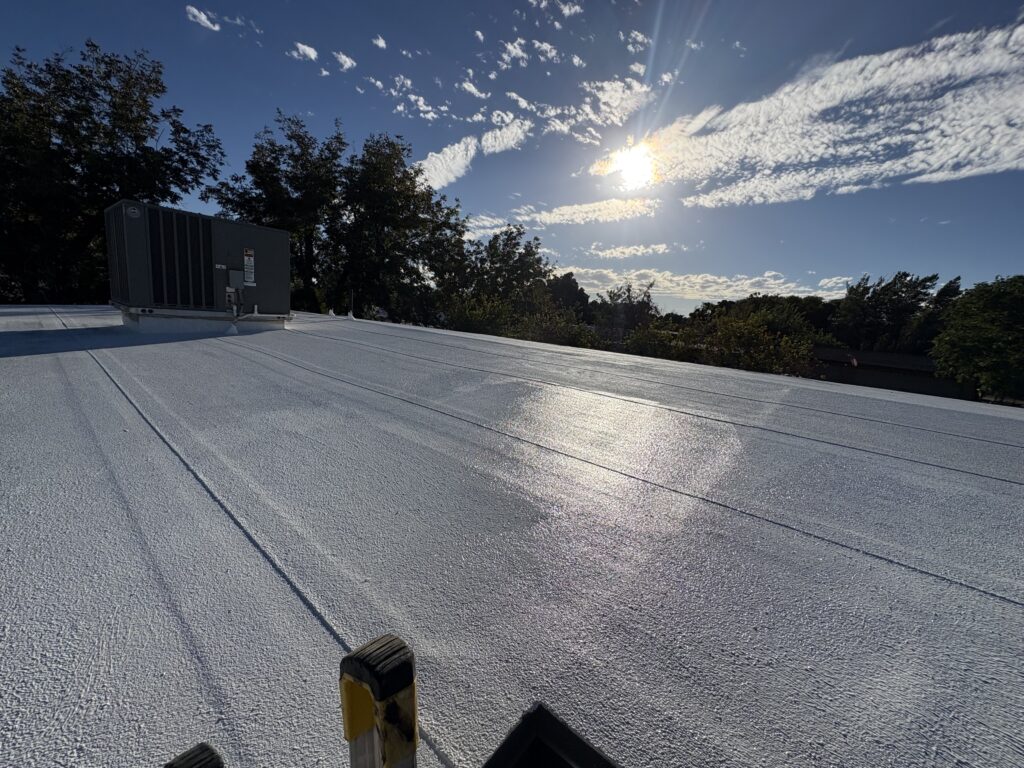
For homeowners in Yuma, Arizona, flat roofs face intense sunlight, extreme temperatures, dust, and seasonal storms. A properly selected and professionally installed roof coating can help protect a suitable roof against these conditions. However, lasting protection requires more than spreading white coating over an aging surface. It requires a thorough inspection, necessary repairs, proper preparation, and materials designed for demanding rooftop exposure.
Why Flat Roofs Must Remain Watertight
Every roof depends on a continuous protective system, but flat roofs require particular attention because water moves off them more slowly than it does from steep roofs.
Seams, pipe penetrations, roof edges, flashing, and drainage outlets are common trouble spots. Small openings in these areas can allow water into the roof assembly, especially when standing water remains nearby.
Maintaining a watertight roof means protecting these details along with the main roof surface. Coating the open areas while overlooking cracked flashing or deteriorated seams leaves potential entry points behind.
At 48Solar & Roofing, coating recommendations begin with evaluating the roof’s condition and identifying the issues that need attention before application.
Poor Drainage and Ponding Water
Although commonly called flat roofs, these roofing systems should have enough slope to direct water toward drains, scuppers, or other designated outlets.
Unfortunately, some homes have inadequate drainage because of original design or construction shortcomings. Insufficient slope, poorly located outlets, and improperly formed transitions can leave water trapped on the roof. Settling, sagging decking, debris, and later modifications may make these conditions worse.
Standing water should never be dismissed simply because a roof has not started leaking. It keeps vulnerable areas exposed to moisture and can affect coating performance. Manufacturer guidance warns that some coatings are adversely affected by ponding water and calls for addressing these areas before coating.
A coating may protect an appropriate roof, but it cannot create slope or repair a sagging structure. Drainage concerns deserve their own evaluation and repair plan.
Commercial Grade Products for Demanding Conditions
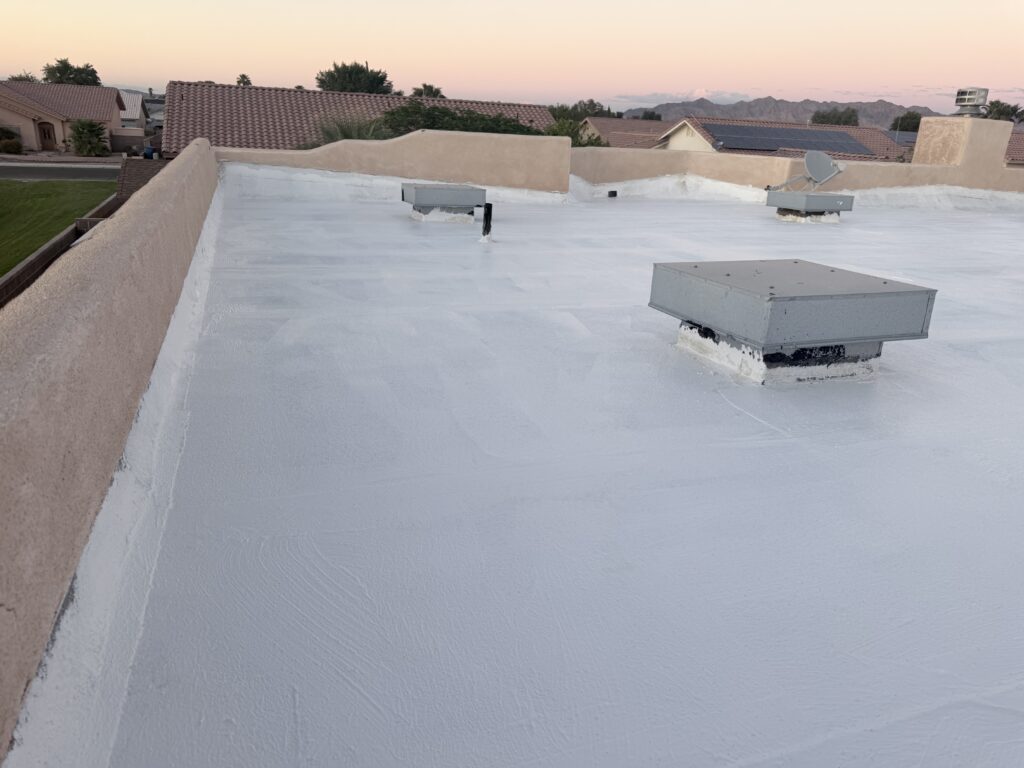
48Solar & Roofing uses commercial grade roof coating products selected for high ultraviolet resistance and demanding rooftop conditions. These are professional coating systems chosen for the roof’s material, condition, and exposure.
This approach differs from buying a general maintenance coating at a do-it-yourself home improvement store and applying it without a complete roof assessment.
Retail products vary, and the place a product is sold does not automatically determine its quality. The meaningful differences are its technical specifications, approved uses, compatibility, required application thickness, and suitability for the conditions on your roof.
48Solar & Roofing focuses on those requirements. The goal is to install an appropriate protective system with the preparation and detailing it needs to perform.
Why UV Resistance Matters in Yuma
Yuma roofs endure prolonged sunlight and extreme summer heat. Selecting a coating with appropriate ultraviolet resistance is therefore an important part of planning a restoration project.
Reflective coatings can also reduce the amount of solar energy absorbed by the roof. ENERGY STAR explains that reflective roofing can reduce heat transfer into buildings, with energy benefits generally greatest in hot, sunny climates. Actual savings depend on insulation, building characteristics, and the existing roof.
However, a white appearance alone does not establish durability or waterproofing performance. Product selection must account for the roofing substrate, drainage, existing coatings, and manufacturer requirements.
A reflective finish is valuable only when the roofing system beneath it receives the attention it needs.
A Comprehensive Inspection Before Coating
Homeowners should understand what is happening on their roof before deciding how to spend money protecting it.
48Solar & Roofing inspects the roof, documents identified concerns, and provides the homeowner with a comprehensive roof inspection summary. This gives homeowners a clearer basis for comparing coating, repairs, and replacement.
The evaluation addresses visible conditions such as deteriorated surfaces, questionable patches, open seams, flashing problems, and signs of poor drainage. Where concealed moisture or underlying damage is suspected, further investigation may be necessary.
An inspection summary should distinguish observed problems from conditions that require additional evaluation. No surface inspection can guarantee that every hidden issue has been identified.
The purpose is informed decision-making: homeowners deserve an explanation of the roof’s condition and the reasoning behind the recommended work.
Repairs and Preparation Come First
Even a commercial grade coating can fail when applied over an unsuitable surface. Dust, loose material, moisture, and deteriorated patches can interfere with adhesion.
Before coating, necessary repairs must be completed and the roof prepared according to the selected system’s instructions. This may involve cleaning, removing failing material, repairing seams, addressing penetrations, and applying compatible primers or reinforcement.
The roof must also meet the product’s moisture and weather requirements before application.
Application thickness is another critical detail. Stretching coating across excessive square footage can leave insufficient protection. The specified coverage rate and finished thickness matter more than how quickly the roof turns white.
48Solar & Roofing’s approach combines professional materials with inspection, repairs, and careful application.
Matching the Coating to the Roof
Acrylic and silicone coatings serve different applications, and neither should be selected by price alone.
Many acrylic coatings provide reflective protection and UV resistance but are unsuitable for persistent ponding. Certain silicone products offer ponding-water resistance, although drainage, substrate preparation, and warranty requirements still apply. GAF’s Unisil instructions, for example, require positive drainage and a clean, dry substrate without trapped moisture.
The correct choice depends on the complete roof assessment.
Make an Informed Roofing Decision
Coating is not the right answer for every flat roof. Extensive deterioration, damaged decking, trapped moisture, or serious drainage defects may require a different solution.
48Solar & Roofing helps homeowners understand those issues through its inspection findings and comprehensive summary. That information supports a decision based on roof condition, necessary repairs, and realistic expectations.
For flat roof coatings in Yuma, choose a process that starts with understanding your roof and uses commercial grade, UV-resistant products suited to the job.
Visit 48Solar.com to request a free roofing quote from 48Solar & Roofing


